Reflections on LinkedIn’s ‘Show Translation’ Feature
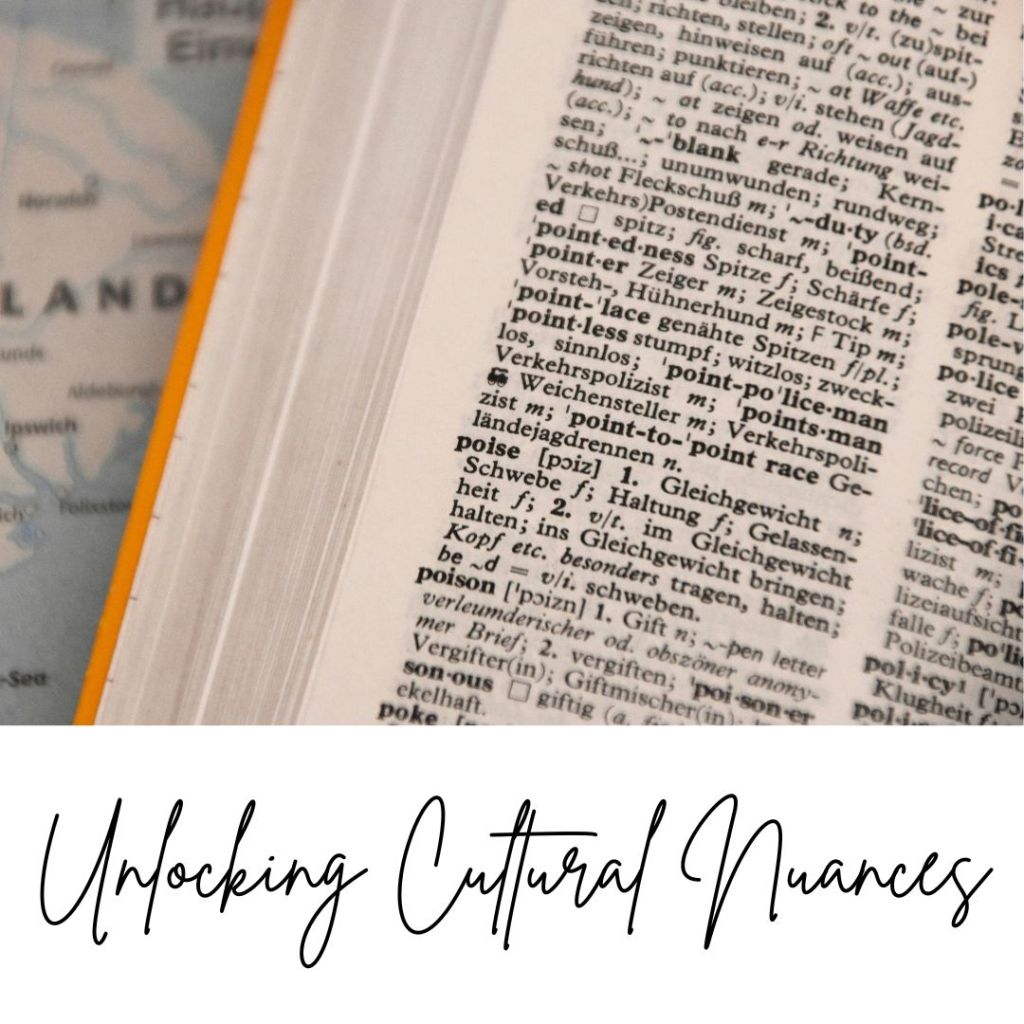
With International Translation Day taking place today, I wanted to share a discovery on LinkedIn: the ‘Show Translation’ button. While I love that this feature exists, it has prompted me to reflect on an additional layer it may require in our thinking. The translations offered seem to be basic AI translations, often lacking nuance when it comes to intercultural understanding.
Having grown up surrounded by multiple languages and cultures, and living in an environment where people come from diverse backgrounds, I’ve become acutely aware of the importance of not only hearing the words people say, but also placing them in the context of their cultural backgrounds. In my early years in the UK, I often found myself being perceived as ‘too German’—a code for being too direct. The irony was that I never saw myself as German, but that’s another story!
A dear colleague would often remind me before meetings to ‘be more English’ or ‘more German’ depending on the situation. Having lived in the UK for 19 years, people now tell me when I visit my hometown that my German is ‘very good,’ but they somehow ‘knew’ I was from England. I’ve no idea what my language is doing there. Am I ‘very British’? Certainly not how I’m perceived in the UK!
Back to International Translation Day. What fascinates me most are the hidden layers in translation. When working in schools, I always looked forward to exploring these layers with my students, especially when they participated in the Stephen Spender competition, where they had the chance to translate a poem. I was passionate about introducing them to works like Henning Ziebritzki’s Vogelwerk. His description of the blackbird invites us to see the bird as it is, without translating it into our own human projections. This made translation more challenging, as students had to be precise in their choice of words.
Coming back to LinkedIn’s ‘Show Translation’ button, the translations I see often feel a bit ‘off’—words that I wouldn’t have chosen, sometimes more elaborate and flowery, and other times starkly direct. It reminds me of Ferdinand de Saussure’s approach to language. He presents language as both a semiotic system—a set of signs—and a social phenomenon, a product of a language community. LinkedIn has undoubtedly connected me with people around the world. Even though we usually communicate in English, I can sense the cultural differences beneath the surface, enriching my understanding of different perspectives.
For me, the ‘Show Translation’ button is a small but fascinating tool. By keeping an open heart, I can continue learning about others, through the imperfect lens of AI translation.
 Candida Javaid Coaching & Mentoring