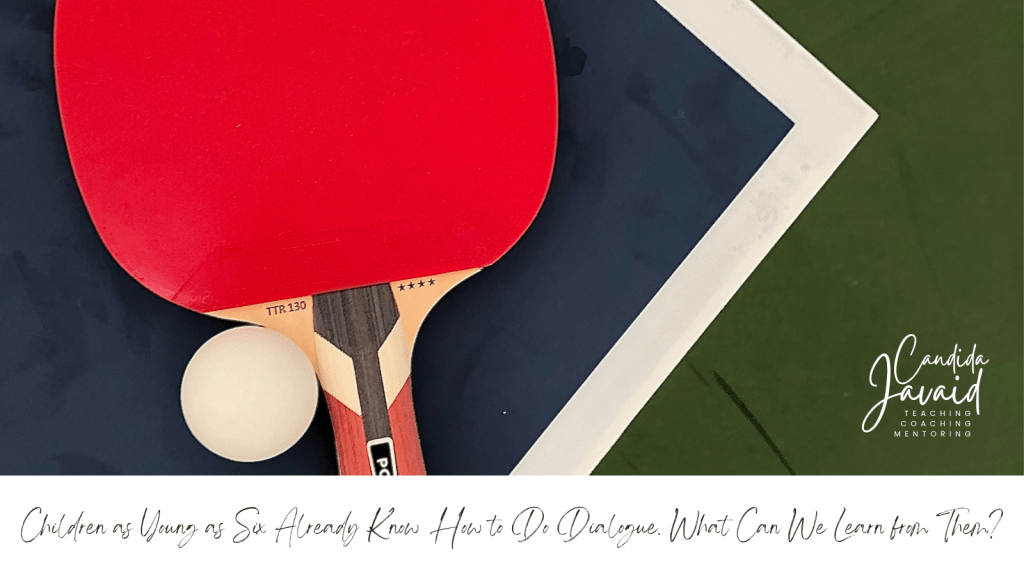
Photo by miniperde on Unsplash
After 20 years in secondary education and two years away from the classroom, I recently stepped back in, this time as a supply teacher in primary schools. I expected to encounter a new world. What I did not expect was to discover practices that many secondary students, and even adults and families, could learn from.
It took me a little while to catch on to what was happening. During class discussions, the children were making hand gestures to each other that, at first, meant nothing to me. Once they explained them, I realised I had been invited into a different kind of dialogue.
They had gestures for:
· agreeing
· challenging
· building on what another person had said
And it worked. Really, really well.
What struck me most was not just the system itself, but how quickly someone like me, who might only spend a day with a class, could pick it up and become part of the conversation. That says a lot about the clarity and accessibility of the approach. It also made me think of William Isaacs’ writing on dialogue:
“The intention of dialogue is to reach new understanding and, in doing so, to form a totally new basis from which to think and act.”
Isn’t that really what we want in classrooms? Yes, children need to learn content. But they also need to make sense of what they are learning, and that sense-making often happens through voicing, listening, and responding to one another. What I loved was how the conversation shifted away from the familiar classroom pattern: Teacher asks a question. One child answers. Everything returns to the teacher. Ping pong.
This was not ping pong.
The children looked at each other. They looked at me. Sometimes they looked down because they were thinking. And their hand gestures showed everyone that thinking and engagement were happening, even in silence.
This experience also brought to mind David Kantor’s 4-player model, which describes four essential roles in any productive conversation:
· Move – introducing a new idea or direction
· Follow – supporting or agreeing with an idea
· Oppose – offering challenge or a different perspective
· Bystand – observing, reflecting, and making sense of what is happening
Kantor suggests that healthy dialogue requires a balance of all four.
As I watched the children, I found myself mapping their gestures to these roles:
· Move – the familiar raised hand to contribute
· Follow – the “agree” gesture
· Oppose – the “challenge” gesture
· Bystand – perhaps the “building on” gesture, where a child reflects and extends the thinking
I am new to this practice in primary schools, but I have now seen variations of it in several schools. Different gestures, different routines, yet the same underlying principle: a shared tool for communicating and thinking together.
And it leaves me wondering:
What might happen if we took these simple dialogue tools seriously, not just in primary classrooms, but in secondary schools, staff rooms, and even family conversations?
 Candida Javaid Coaching & Mentoring